- About 2 minread
- General ideashold in most courts
- Checked October 30, 2026educational only
The short version
Courts treat deadlines seriously, and the effects of a missed one vary. This page covers the general ideas, so you can ask better questions of the people who can help.
Why deadlines matter
Deadlines keep a case moving fairly. When one is missed, the court may refuse a late paper, allow the other side to move ahead, or in some situations rule without hearing from you.
Common first steps people take
- Check the paper that set the date and confirm what the deadline actually was.
- Check the docket or court website to see what has happened since.
- Contact the clerk's office or the court help center with a process question, such as how to ask for more time.
- Write down what happened and when, honestly and in order.
- Contact legal aid or a licensed attorney as soon as you can, because timing can matter.
Asking the court for more time
Courts often have a way to ask for more time, or to ask the judge to excuse a late paper. The forms, reasons and rules differ by court, so check your court's instructions. Be honest and specific about what happened.
What not to do
- Do not change dates or backdate anything.
- Do not stay silent and hope it goes away.
- Do not guess about a deadline you can look up.
Prevent the next one
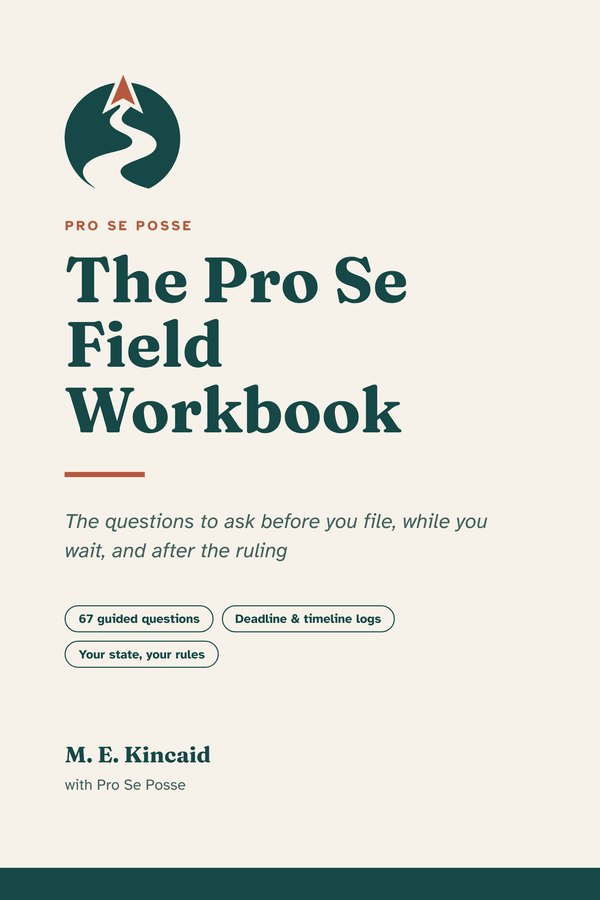
A deadline log, with every date, the rule or order it came from, and when it starts, is the simplest protection. The Pro Se Field Workbook includes one you can copy and keep.